3D SCANNING


Introduction to 3D Scanning

3D scanning is the process of using tools like lasers, structured light or photogrammetry to capture the shape and texture of an object or environment in digital form. The resulting 3D model can be used for various applications like visualisation, simulation, prototyping, and manufacturing.


The process involves capturing a series of data points using a 3D scanner. These data points are combined to create a point cloud, representing the shape of the object. From the point cloud, a mesh model is generated, made up of polygons, and this can be further processed to create a textured 3D model, including colour and texture information.


The applications of 3D scanners are diverse. In manufacturing, a 3D scanner can be used for reverse engineering, creating digital models from physical parts for design or reproduction. The entertainment industry uses 3D scanners to create realistic digital characters or environments for films, video games, and virtual reality experiences. Healthcare uses 3D scanners to create custom prosthetics or surgical guides based on the patient's anatomy.


Overall, 3D scanners are a powerful tool that has opened up new possibilities for design, manufacturing, entertainment, healthcare, product development and other fields. As technology advances, we can expect even more exciting applications of 3D scanners in the future.


3d scanning for custom parts and prototypes in Johannesburg south africa - 3D Printing Store

TYPES OF 3D SCANNING TECHNOLOGIES


There are several types of 3D scanning techniques available, each with their own strengths and weaknesses. From laser scanning and structured light scanning to photogrammetry and contact scanning, each method has its unique features and is suitable for certain applications. Whether you are new to 3D scanners or an experienced user, understanding the different types of 3D scanners can help you choose the right method for your project and achieve the best results.


Here is a list of some of the most common 3D scanning technologies:


Structured Light 3D Scanning

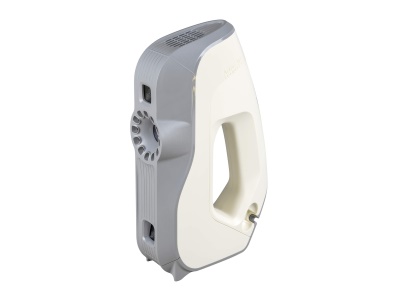
Structured Light Scanning is a 3D scanning technology that uses a projector and a camera to capture the shape and texture of an object. This technology is commonly used along with a 3D printing services to create accurate 3D models of objects for additive manufacturing. The structured light patterns are projected onto the surface of the object, and the camera captures images of the surface, which are then used to calculate the depth and shape of the object's surface. The resulting data is used to create a 3D model of the object, which can be further refined and optimised for 3D printing.


The accurate 3D models created using structured light scanning technology are essential in ensuring that the final 3D printed object matches the original design. It also allows for the creation of complex geometries that would be difficult or impossible to create using traditional manufacturing methods. In addition to its use in creating 3D models for 3D printing, structured light scanning can also be used in quality control, reverse engineering, and cultural heritage preservation.


Laser 3D Scanning

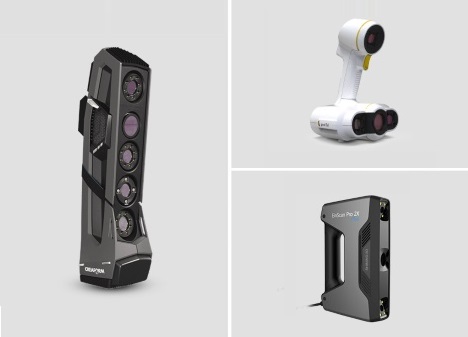
Laser scanning is a 3D scanning technology that can be used with a 3d printer to create accurate 3D models of objects for additive manufacturing. It uses a laser beam to scan an object, measuring the distance to the surface at each point. 3D Laser scanning technology is known for its high accuracy and ability to capture intricate details and surface texture, making it ideal for creating replicas of objects with complex shapes and textures.


It is extensively used in various 3D printing applications, including product design, reverse engineering, and quality control, ensuring the 3D printed objects meet the required specifications and have the desired level of accuracy. Overall, 3D laser scanning technology is a powerful tool in the 3D printing industry, enabling the creation of accurate and complex 3D models for additive manufacturing.


Photogrammetry 3D Scanning

Photogrammetry is a 3D scanning technology that uses photographs to create 3D models of objects. Multiple photographs of an object are taken from different angles, and specialised software is used to stitch them together to create a 3D model. The accuracy of the 3D model depends on the number and quality of the photographs taken. Photogrammetry is widely used along with 3d a printer to create accurate 3D models of objects for additive manufacturing. Its ability to capture objects of various sizes and shapes makes it a valuable tool in the 3D printing industry.


It is commonly used in product design and reverse engineering to create 3D models of existing objects or prototypes, which can then be optimised and refined for 3D printing. Additionally, photogrammetry 3d scanners can be used to capture complex geometries and fine details, which can be challenging to capture using other 3D scanner technologies. Overall, photogrammetry is a powerful tool in the 3D printing industry, enabling the creation of accurate and complex 3D models for additive manufacturing.


Time-of-Flight (ToF) 3D Scanning

Time-of-flight (ToF) scanning is a 3D scanner that uses infrared light to measure the distance between the scanner and the object being scanned. It works by emitting a light signal, which bounces back off the object and is received by the scanner. The time it takes for the light signal to travel to the object and back is measured, and this data is used to create a 3D model of the object.


ToF 3d scanners are particularly useful when used with a 3d printer for creating accurate and detailed 3D models of objects with smooth surfaces. It is commonly used in industrial applications, such as quality control and inspection, where precision and accuracy are critical. It can also be used in product design and reverse engineering to create 3D models of existing objects or prototypes, which can then be optimised and refined for 3D printing.


Overall, Time-of-flight (ToF) 3D scanners are a powerful tool in the 3D printing industry, enabling the creation of accurate and detailed 3D models for additive manufacturing.


Contact 3D Scanning

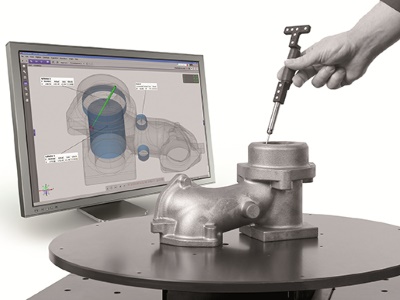
Contact scanning is a 3D scanning technology that involves physically touching the object being scanned with a probe or stylus to capture its shape and geometry. The probe or stylus is attached to a coordinate measuring machine (CMM), which records the position of the probe as it moves along the surface of the object. A Contact scanner is often used in 3D printing for applications where high levels of accuracy and precision are required, such as quality control and inspection.


It is particularly useful for capturing small details and features that other 3D scanner technologies may not be able to capture. Additionally, it can be used to scan a wide range of materials, including metals, plastics, and ceramics, making it a versatile tool in the 3D printing industry. Overall, contact 3d scanners are a valuable 3D scanning technology in the 3D printing industry, enabling the creation of accurate and detailed 3D models for additive manufacturing.


Computed tomography (CT) 3D Scanning

Computed tomography (CT) scanning is a non-destructive 3D scanning technology that uses X-rays to create detailed 3D models of objects. The object is placed on a rotating platform, and X-rays are emitted from different angles. The X-rays that pass through the object are detected by a sensor and used to create a 3D model.


A CT 3d scanner is particularly useful in 3D printing for creating accurate and detailed 3D models of objects with complex internal structures, such as medical implants or industrial components. It can also be used in product design and reverse engineering to create 3D models of existing objects or prototypes with internal features. Additionally, a CT 3d scanner can detect defects or damage within an object, which can be useful in quality control and inspection.


Overall, a CT scanner is a powerful 3D scanner technology in the 3D printing industry, enabling the creation of accurate and detailed 3D models of objects with complex internal structures.


Magnetic Resonance Imaging (MRI) 3D Scanning

Magnetic resonance imaging (MRI) is a non-invasive 3D scanner that uses strong magnetic fields and radio waves to create detailed images of the inside of an object. MRI is commonly used in medical applications to create detailed images of the human body, but it is also useful in 3D printing for creating accurate and detailed 3D models of objects with complex internal structures. An MRI 3D scanner can detect soft tissues and organs within an object, which is particularly useful in medical implant design and development.


In the 3D printing service industry, an MRI scanner is used to create 3D models of anatomical structures, such as bones and organs, for medical research, education, and surgical planning. It can also be used in product design and reverse engineering to create 3D models of existing objects or prototypes with internal features.


Overall, an MRI scanner is a powerful 3D scanning technology in the 3D printing industry, enabling the creation of accurate and detailed 3D models of objects with complex internal structures, particularly in the field of medical applications.


White Light 3D Scanning

White light scanning is a 3D scanning technology that uses structured light patterns to capture the shape and geometry of an object. The object is illuminated with a pattern of white light, and cameras capture images of the object as the pattern distorts around its surface. By analyzing these distortions, a 3D model of the object can be created. White light scanning is often used in 3D printing for applications where high levels of accuracy and detail are required, such as product design and reverse engineering.


It is particularly useful for capturing the geometry of objects with complex shapes, textures, and surfaces. Additionally, white light scanning is a non-contact scanner technology, which means that it is less likely to damage delicate or fragile objects during the scanning process. Overall, white light scanning is a valuable 3D scanning technology in the 3D printing industry, enabling the creation of accurate and detailed 3D models for additive manufacturing..


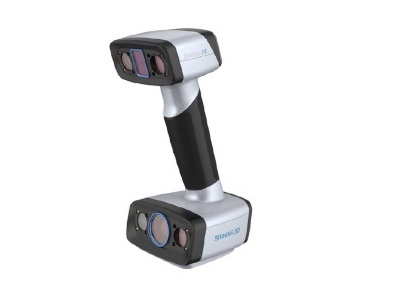
3D Scanning - Structured Light 3D Scanner - Taito 3D Printing Services
Structured Light 3D Scanner
3D Scanning - Laser Scanning 3D Scanner - Taito 3D Printing Services
Laser Scanning 3D Scanner
3D Scanning - Photogrammetry 3D Scanner - Taito 3D Printing Services
Photogrammetry 3D Scanner
3D Scanning - Time-of-Flight 3D Scanner - Taito 3D Printing Services
Time-of-Flight 3D Scanner

3D Laser Scanning

Laser scanning is a popular 3D scanning technique that uses a laser beam to capture the shape and geometry of an object. The laser is projected onto the surface of the object, and the scanner measures the reflection of the laser beam to determine the distance between the scanner and the object's surface. The data is then used to create a 3D point cloud, which can be processed into a 3D model using specialised software.


3D laser scanning is fast and accurate, and it can capture fine details of an object's surface. It is widely used in many industries, including architecture, engineering, and manufacturing, for tasks such as quality control, inspection, and reverse engineering. 3D laser scanning is also used in 3D printing, where it can be used to capture the shape of an object and create a 3D printable model.


  • High accuracy: 3D laser scanning is a highly accurate technique that can capture details as small as a few microns.
  • Speed: 3D Laser scanners can quickly capture large amounts of data, making it an efficient way to scan objects.
  • Non-contact: 3D laser scanning is a non-contact method, which means that it does not require physical contact with the object being scanned. This makes it a safe and non-destructive way to scan delicate objects.
  • Versatility: 3D laser scanning can be used to scan objects of different shapes and sizes, from small parts to large buildings.
  • Colour capture: Many laser scanners can capture colour information along with the shape and geometry of an object, allowing for the creation of visually realistic 3D models.
  • Portable: Some laser scanners are portable and can be taken to the field for on-site scanning.
  • Integration with other technologies: Laser scanning can be combined with other technologies such as photogrammetry and CT scanning to achieve even higher levels of accuracy and detail.


3D Scanning for custom parts and prototypes in Johannesburg south africa - 3D Printing Store

3D SCANNING TECHNIQUES

Reverse Engineering

Reverse engineering is the process of creating a 3D digital model of an existing physical object using 3D scanning technology. This technique involves capturing the geometry of the object using various methods such as structured light scanning or laser scanning, and then using specialised software to create a 3D model. This model can then be used to recreate the object or modify it using computer-aided design (CAD) software.


Reverse engineering is used in a wide range of industries, including aerospace, automotive, and manufacturing, where it can be used to create spare parts, improve product designs, and analyze the structure and function of existing products. By accurately replicating existing objects, reverse engineering can help reduce the time and cost of product development while improving product quality and performance.


Surface Reconstruction

Surface reconstruction is a process used to create a 3D surface model from a set of points or a point cloud generated by 3D scanning. The process involves analyzing the point cloud data and using specialised software to create a mesh, which is then refined to create a smooth and accurate 3D surface model. Surface reconstruction is an essential step in 3D printing, as it ensures that the resulting object has the correct shape and surface characteristics.


The accuracy of the surface reconstruction depends on the quality of the initial point cloud data, the algorithm used for surface reconstruction, and the degree of refinement applied. Surface reconstruction is used in various applications, including medical imaging, product design, and cultural heritage preservation. It is a powerful tool for creating accurate and detailed 3D models of complex objects, allowing for efficient prototyping, manufacturing, and analysis.


Computerised Tomography (CT) Scanning

Computerised tomography (CT) scanning is a 3D scanning technique that uses X-rays to create detailed images of the internal structures of an object. The CT scanner rotates around the object, capturing multiple images from different angles, which are then combined to create a 3D model. CT scanning is particularly useful for capturing the internal structures of objects that are difficult to scan using other techniques, such as complex assemblies or objects with internal cavities.


CT scanning is commonly used in the medical field to diagnose and treat a variety of conditions, but it also has many applications in other industries, such as aerospace, engineering, and materials science. CT scanning provides detailed information about the internal structures of an object, allowing for more accurate analysis and evaluation. CT scanning can be expensive and time-consuming, but it is a powerful tool for creating accurate and detailed 3D models of complex objects.


Augmented Reality (AR) Scanning

Augmented reality (AR) scanning is a 3D scanning technique that uses a combination of 3D scanning and AR technology to capture and display virtual 3D models of real-world objects. AR scanning involves using a specialised scanner to capture the 3D geometry and texture of an object and then overlaying this information onto a real-world image or video. This creates the illusion that the virtual 3D model is part of the real-world environment.


AR scanning has many applications, including product visualisation, marketing, and gaming. It allows users to interact with virtual objects in a more immersive and realistic way. AR scanning is becoming increasingly popular, as the technology for creating and displaying virtual 3D models becomes more advanced and affordable. The ability to visualise and interact with virtual objects in the real world has many potential benefits, from enhancing the user experience to improving productivity and efficiency in various industries.


Volume Rendering

Volume rendering is a 3D visualisation technique that is used to create images from 3D volumetric data sets, such as CT or MRI scans. Volume rendering is able to create highly detailed and realistic visualisations of internal structures, allowing for more accurate analysis and diagnosis. This technique works by dividing the 3D data set into a grid of small-volume elements (voxels), each of which contains information about the density and colour of the underlying tissue or material.


These voxels are then rendered as 3D pixels, creating a realistic and detailed 3D image of the internal structures. Volume rendering is commonly used in the medical field, where it can be used to visualise and analyze internal organs and tissues in great detail. It also has applications in other industries, such as engineering and geology, where it can be used to visualise and analyze complex structures and materials. Volume rendering is a powerful tool for creating realistic and detailed visualisations of 3D data sets, allowing for more accurate analysis and interpretation of complex structures and materials.


3D Scanning Tips and Tricks

Choose the Right Scanning Technique: Different objects require different scanning techniques, so choose the one that will work best for your specific object and application.


Optimise Lighting: Good lighting is essential for accurate scanning, so make sure the object is well-lit and there are no shadows or reflections that could interfere with the scanning process.


Use a Tripod: Stability is key to achieving accurate scans, so use a tripod to keep the scanner steady and avoid shaking or movement.


Clean the Object: Dirt, dust, and other debris on the object can interfere with scanning, so make sure the object is clean and free of any obstructions.


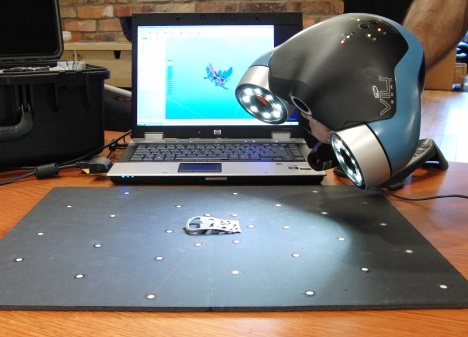
Use Markers: If you're scanning a complex object with lots of features, using markers can help the scanner identify key points and improve accuracy.


Choose the Right Resolution: The resolution of your scan will affect the level of detail in your final 3D model, so choose the right resolution based on your needs.


Use Multiple Scans: Sometimes, it's necessary to take multiple scans from different angles to capture all of the necessary data and create a complete 3D model.


Post-Processing: After scanning, the data will need to be processed and cleaned up before it can be used to create a 3D model. This may include removing noise, smoothing the mesh, or filling in missing areas.


3D Scanning for custom parts and prototypes in Johannesburg south africa - 3D Printing Store

Please Get In Touch

You can send us an email below

Tshimologong Precinct
41 Juta Street, Braamfontein
Johannesburg
South Africa
2001

Contact Number: 082 638 6363
(incl Whatsapp)

Operating Hours
Monday - Friday: 24 Hours
Saturday: 24 Hours
Sunday: 24 Hours
Whatsapp: 24 Hours